Emergency Plumbing Guide: Steps to Take Before the Pros Arrive
Is there water gushing where it shouldn’t? Maybe your toilet’s overflowing, or a pipe in the basement just burst. Plumbing disasters don’t wait for business hours. They ruin evenings, weekends, and sleep. At Fergusons Plumbing, we know how overwhelming it feels when the water rises and panic sets in.
That’s why we’re here—to help you take back control, even in those first frantic minutes. This guide will walk you through clear, safe steps to protect your home and family before our emergency plumbing team arrives. Let’s get started.
Recognizing a Plumbing Emergency 🚨
Some plumbing problems can wait. Others? They demand immediate action.
If you notice any of the following, you’re likely dealing with a true plumbing emergency:
- Burst pipes—Water pouring out, flooding floors, or soaking walls.
- Major leaks—Pools of water forming rapidly, especially near electrical outlets or appliances.
- Sewage backup—Foul smells, water bubbling up from drains or toilets.
- Overflowing toilets—Water spilling onto the floor, not stopping with a plunger.
- No hot water in winter—Especially if you have vulnerable family members.
- Gas line smells—A rotten egg odor. This is serious—evacuate immediately.
Plumbing emergencies move fast. So should you.
Immediate Actions to Minimize Damage
Imagine your home like a sinking ship. The first step is to stop the leak.
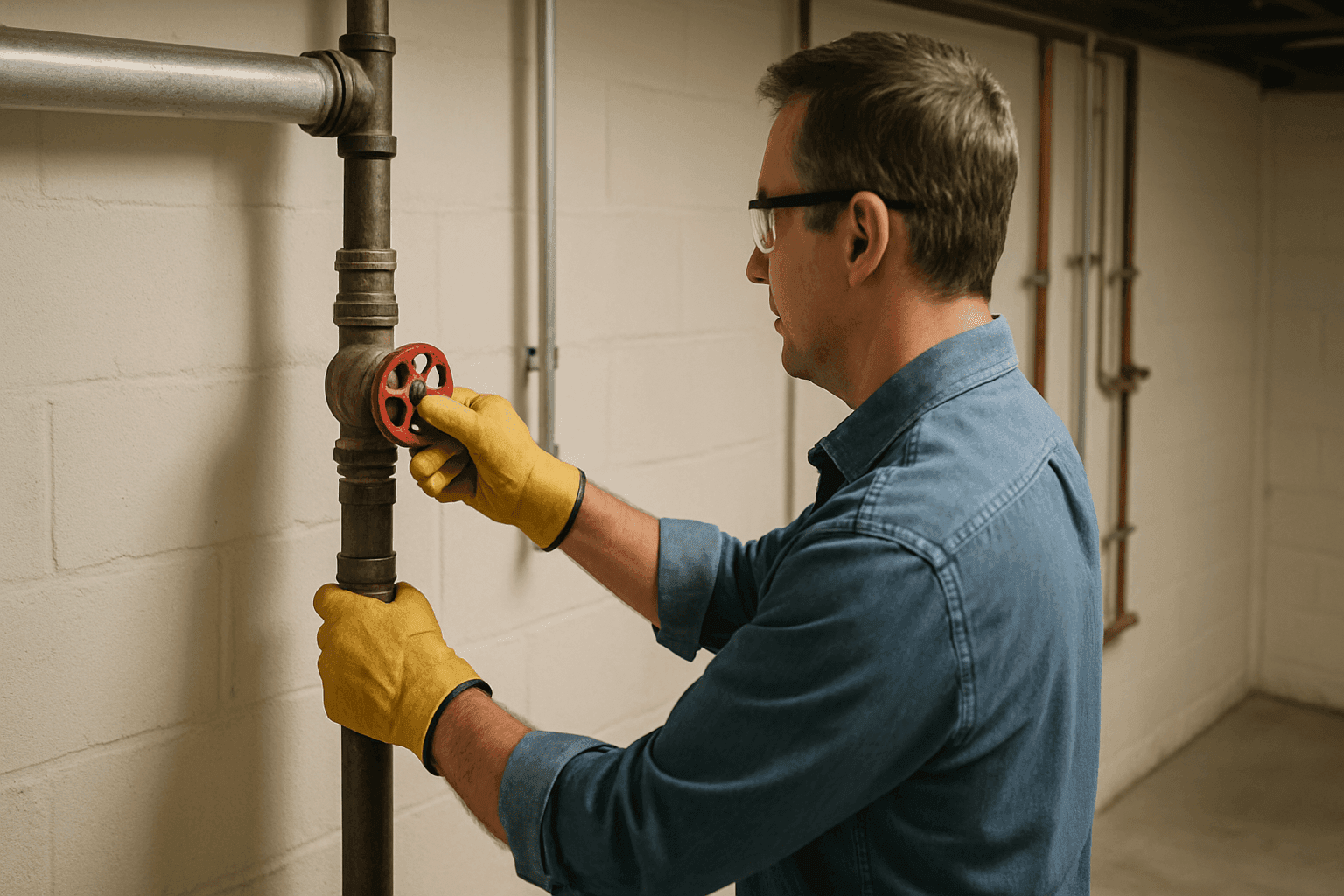
1. Turn off the water main.
Most homes have a main shut-off valve where the water line enters the house (often in the basement, crawlspace, or near a utility closet). Turn it clockwise—tight, but not forced. This cuts off the water supply and slows further damage.
2. Isolate the problem, if possible.
If you know the leak is coming from a specific fixture (like a toilet or sink), look for a small shut-off valve nearby. Turn it off to stop the flow at that source.
3. Unplug or turn off electrical devices in the area.
Water and electricity are a dangerous mix. If water has reached outlets or appliances, don’t touch them—turn off power at the breaker, if safe to do so.
4. Contain water with towels, buckets, or pans.
Stop water from spreading to other rooms. Move valuables, rugs, or electronics out of the way.
5. Open windows and doors for ventilation.
This helps reduce moisture buildup and potential mold risk.
Urgent Safety Callout:
If you smell gas or suspect a gas leak, evacuate your home immediately. Call emergency services from outside. Do not use your phone indoors or flip any switches.
Safety First: What Not to Do
When disaster strikes, instinct can lead us astray. Here’s what not to do:
- Don’t use electrical appliances in wet areas.
Even a little water can carry a big shock. - Don’t ignore a sewage backup.
Raw sewage carries bacteria and viruses. Avoid contact and ventilate the area. - Don’t try to repair gas lines yourself.
Leave gas safety checks and repairs to certified professionals. - Don’t pour chemicals down drains to fix a clog.
They can corrode pipes and create toxic fumes. - Don’t keep water running.
Even small drips add up quickly during an emergency.
If you’re unsure, wait for help. Some things are simply too risky for DIY.
When to Call a Professional
Not every leak means an emergency call, but certain situations need help—now.
Call Fergusons Plumbing right away if:
- The main shut-off doesn’t stop the leak.
- You see water pooling near electrical panels or outlets.
- There’s a risk of contamination (sewage, chemical smells).
- You suspect a broken gas line or detect a strong gas odor.
- The problem is getting worse by the minute.
When you call, be ready to provide:
- Your address and the best way to reach you.
- What happened (burst pipe, overflowing toilet, etc.).
- Where the problem is located (kitchen, basement, bathroom).
- Any steps you’ve already taken (shut off water, unplugged devices).
This info helps our emergency plumbing team bring the right tools and fix the issue faster.
Quick Safety Checklist
- [ ] Locate the main water shut-off valve.
- [ ] Turn off water supply—main or local.
- [ ] Move valuables and electronics from affected areas.
- [ ] Avoid electrical contact in wet zones.
- [ ] Ventilate rooms if safe.
- [ ] Evacuate immediately if you smell gas.
Stay calm. Every minute counts, but safety comes first.
DIY vs. Call a Pro
It’s tempting to grab a wrench and try to fix things yourself. Sometimes, that’s okay—tightening a loose fitting, replacing a washer, or using a plunger on a minor clog.
But when it comes to:
- Pipe Installation near you
- Water heater repair
- Gas line installation
- Sump pump repair
- Backflow testing
- Repiping
- Sewer line repair or installation
...these jobs demand licensed professionals. Modern plumbing and gas systems follow strict codes for good reason—your safety and your home’s structure depend on it. The Australian Standards (AS/NZS 3500 series) and your local building codes set clear rules for what’s safe and what isn’t.
Callout:
If you’re ever in doubt, don’t risk it. Emergency plumbing is about protecting your home and everyone in it.
What Pros Do On Arrival
Once Fergusons Plumbing arrives, here’s what you can expect:
- A licensed plumber will assess the situation and confirm the source of the problem.
- They’ll stop any active leaks and make temporary repairs if needed.
- Water and gas safety checks will be done before any further work.
- Damaged fixtures, pipes, or appliances will be inspected and replaced or repaired.
- We’ll explain next steps, including any follow-up repairs or recommendations for preventing future emergencies.
Our team is equipped to tackle everything from water heater installation to leak detection—24/7, even on holidays.
Prevention & Maintenance
The best emergency is the one you never have. Regular checks and simple habits keep surprises at bay.
- Inspect exposed pipes for drips, corrosion, or bulges.
- Know where all shut-off valves are—label them if needed.
- Schedule annual plumbing inspections, including backflow testing and gas safety checks.
- Clean drains regularly—avoid flushing wipes, grease, or foreign objects.
- Install water leak detectors or alarms in basements and near water heaters.
The Australian Building Codes Board recommends regular maintenance for plumbing and gas systems. Prevention saves money, headaches, and time.
Costs & Time Factors
Plumbing emergencies are never convenient—but knowing what to expect helps.
- After-hours or holiday calls usually cost more than standard business hours.
- Severity of the emergency (burst main vs. slow leak) affects both cost and repair time.
- Parts availability—specialized fixtures or older pipes may take longer to replace.
- Restoration and cleanup might require extra time, especially after flooding or sewage backup.
Most urgent repairs can be started immediately on arrival, with follow-up work scheduled as needed. We’ll always explain what’s urgent, what can wait, and what it will take.
When It’s an Emergency
If you’re asking yourself, “Should I call now?”—you probably should.
- Burst pipes
- Flooded rooms
- Sewage or foul odors
- No water or no hot water, when it’s needed most
- Gas leaks
These are never “wait and see” situations. Fast action protects your home and your loved ones.
FAQ
What if I can’t find my main shut-off valve?
Look along the perimeter of your basement, crawlspace, or where the water meter enters. In some homes, it’s outside near a hose bib. If you still can’t find it, call Fergusons Plumbing for advice.
Can I use my plumbing after a leak is fixed?
Only turn the water back on after a plumber says it’s safe. Hidden damage or pressure issues can cause another emergency.
What should I do if my sump pump fails during heavy rain?
Turn off power to the pump, if safe. Use buckets to bail out water. Call for emergency plumbing help right away—flooding can cause structural damage fast.
Is it safe to use chemical drain cleaners?
Avoid them during emergencies—they can make things worse and harm pipes. Plumbers have safer, more effective tools for unclogging toilets and drains.
Local/Seasonal Considerations 🌧️
Here in our region, plumbing emergencies often spike after heavy rain, freezing nights, or sudden thaws. Keep basement drains clear and check outdoor faucets before winter. If you’re heading out of town, shut off the water main and drain pipes to prevent unpleasant surprises.
Remember, Fergusons Plumbing offers 24/7 emergency plumbing services, so help—and peace of mind—is always near you.
When plumbing emergencies strike, you don’t have to face them alone.
Call Fergusons Plumbing now — or reach us anytime at 844-493-8438 .